Businesses do not all create waste in the same way. A restaurant managing daily garbage, a contractor clearing renovation debris, and a property manager preparing a building for new tenants all need disposal support, but the right bin setup can look very different.
At Basic Bins, we help businesses compare dumpster types based on how waste is created, how long the bin is needed, and how often pickup makes sense. A front-load dumpster is typically better for recurring waste collection, while a roll-off dumpster is usually the better fit for temporary, high-volume, or project-based waste removal. Knowing the difference can save time, reduce disruption, and make cleanup easier to plan.
Choosing The Right Dumpster Type For Commercial Cleanup Needs
The best option depends on whether your waste is part of normal operations or tied to a specific project. Ongoing commercial waste needs usually call for a container that stays on site and is emptied on a schedule. A temporary cleanup, renovation, construction job, landscaping project, or bulky disposal job usually needs more capacity for a shorter period.
| Feature |
Front Load Dumpster |
Roll Off Dumpster |
Best Business Use |
| Typical purpose |
Recurring waste |
Project waste |
Daily operations or large cleanups |
| Rental duration |
Ongoing |
Temporary |
Service schedule or project timeline |
| Waste volume |
Predictable |
High-volume |
Regular waste or debris bursts |
| Pickup schedule |
Recurring |
After filling or project completion |
Weekly needs or short-term work |
| Placement needs |
Fixed accessible area |
Delivery and pickup space |
Parking lots, loading areas, or jobsites |
Front-Load Dumpsters Are Built For Ongoing Business Waste
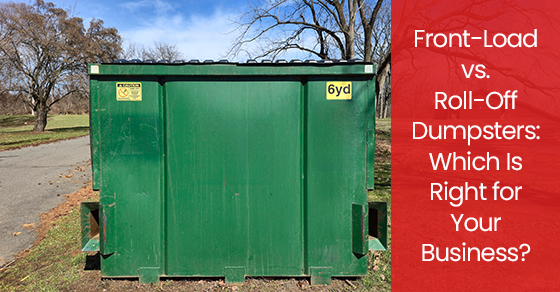
A front-load dumpster works well when waste builds up steadily from day-to-day operations. Restaurants, offices, retail stores, multi-unit properties, warehouses, and similar businesses often need a container that stays in a practical location and is serviced on a recurring pickup schedule.
These bins are designed for predictable waste volumes rather than one-time debris. They help keep garbage, recycling, cardboard, or organics contained between pickups when those services are available. Our front-load options include 2-yard, 3-yard, 4-yard, 6-yard, and 8-yard bins, giving businesses flexibility based on how much waste they produce.
Roll-Off Dumpsters Are Better For Temporary And Large-Volume Waste
A roll-off dumpster is the stronger choice when waste comes from a defined project. Renovations, construction cleanups, roofing jobs, landscaping work, property cleanouts, and commercial decluttering can create more material than a standard front-load container is meant to handle.
With roll-off service, we deliver the bin to the site, you fill it during the work, and we pick it up when the job is done. Our roll-off options include 10-yard mini bins, 20 mini yard bins, 20-yard bins, 30-yard bins, and 40-yard bins. Larger bins can help keep bulky debris in one place instead of forcing repeated small disposal runs.
Waste Type Should Guide Your Dumpster Choice
Material type can narrow the decision quickly. Roll off dumpsters are often used for project debris such as construction waste, wood, drywall, roofing waste, renovation waste, concrete, dirt, rock, metal, cardboard, and mixed recycling when available.
Front-load dumpsters are better suited to regular business waste streams, including general waste, recycling, cardboard, and organics when those services are offered. Not every material belongs in every bin, so we recommend confirming what can and cannot be loaded before booking.
Pickup Frequency Is One Of The Biggest Differences
Front-load service is built around waste that keeps accumulating. If your business produces garbage or recycling every week, scheduled pickup keeps the site manageable without needing to arrange each haul separately.
Roll off service follows a different rhythm. The bin supports a short project window where waste is produced heavily, then removed once the work is complete. Ask yourself: Is this waste ongoing, or is it tied to one project?
Available Space And Site Access Can Affect The Best Option
Placement matters for both bin types. A front-load container usually needs a stable, accessible long-term location where service trucks can reach it regularly. A roll-off bin needs enough room for delivery, pickup, and safe loading during the project.
Businesses should think about parking lots, loading areas, driveways, jobsites, gates, and access routes. We can place a roll-off bin where the business directs, as long as the location is practical and accessible. Customer flow, employee safety, and property constraints should all be part of the plan.
Bin Size Matters More Than Most Businesses Realize
Choosing the right size can help avoid overfilling, paying for unused space, or needing another bin partway through the job. Smaller front-load bins may suit daily or weekly business waste, while larger roll-off dumpsters are better for bulky materials, construction debris, and high-volume cleanups.
Our front-load options noted here include 2-yard, 3-yard, 4-yard, 6-yard, and 8-yard bins. Roll off options include 10-yard mini bins, 20 mini yard bins, 20-yard bins, 30-yard bins, and 40-yard bins. The clearest advice usually comes from describing your waste type, project scope, site space, and timeline before booking.
Cost Depends On The Service Model, Not Just The Bin
Dumpster cost is not only about container size. Front-load costs may depend on bin size, waste type, and recurring pickup needs. Roll off costs may depend on bin size, rental duration, material type, disposal needs, and project timeline.
A cheaper-looking option can become frustrating if it leads to overflow, extra pickups, blocked work areas, or avoidable delays. Businesses are better served by asking for a quote based on how the waste will actually be produced and removed.
The Right Choice Comes Down To How Your Business Creates Waste
Choose a front-load dumpster for recurring, predictable business waste. Choose a roll-off dumpster for temporary, high-volume, bulky, construction, renovation, or cleanup waste. The decision should account for material type, volume, timeline, site access, and pickup needs.
If the answer is not obvious, we can help you compare available dumpster types and sizes before you book.
Common Business Scenarios And The Best Dumpster Fit
Renovations, Construction, And Roofing Projects
Renovation, construction, and roofing projects usually create temporary but heavy waste. A central roll off bin can help keep drywall, wood, roofing material, metal, and other accepted debris organized on site while the project is active.
Restaurants, Retail Stores, Offices, And Multi-Unit Properties
Businesses and properties with continuous waste needs often fit front-load service better. Restaurants may need steady disposal for general waste and organics, retail stores may produce cardboard, and multi-unit properties may require a dependable pickup schedule rather than one large cleanup bin.
Seasonal Cleanouts, Property Decluttering, And Large One-Time Disposal
Annual cleanouts, warehouse clear-outs, landscaping cleanups, and property preparation projects can produce a lot of waste over a few days. A roll-off dumpster can reduce repeated trips and provide space for bulky items or large-volume disposal, subject to accepted materials.
How To Prepare Before Booking A Dumpster For Your Business
Estimate Your Waste Volume And Project Timeline
Before booking, consider whether the waste comes from daily operations or a temporary project. Think about how quickly the bin will fill, whether pickup needs to recur, and whether the work has a firm deadline. A short, intense cleanup usually needs a different setup than steady weekly waste.
Identify The Type Of Waste You Need Removed
List the materials you expect to dispose of, such as construction debris, drywall, wood, roofing materials, concrete, dirt, rock, metal, cardboard, mixed recycling, general business waste, or organics. Confirm accepted materials before loading the bin, and ask whether anything should be separated.
Choose A Safe And Accessible Bin Location
Pick a location with enough room for delivery and pickup. Keep the area clear of vehicles, low branches, locked gates, and blocked access points. Customer flow, staff movement, loading zones, and jobsite safety all affect where the bin should go. We can provide placement guidance if you are unsure.
Find The Right Roll-Off Dumpster For Your Business
A front-load dumpster is often the right choice for ongoing commercial waste, while a roll-off dumpster is often the right choice for temporary, bulky, or large-volume business cleanup. We can help businesses compare dumpster types, available sizes, and service needs before booking.
If your business needs a roll-off dumpster for a renovation, cleanup, construction project, or large-volume waste job, we can help you choose the right bin for your site and timeline. Reach out to Basic Bins today at (604)-256-1583, email us at info@basicbins.ca, or click here to get in touch online.
FAQs About Front-Load and Roll-Off Dumpsters
What Is The Main Difference Between A Front Load Dumpster And A Roll Off Dumpster?
A front-load dumpster is typically used for ongoing commercial waste collection, while a roll-off dumpster is usually used for temporary projects, large cleanups, renovations, construction work, and other high-volume disposal needs.
When Should A Business Choose a Roll-Off Dumpster?
A business should consider a roll-off dumpster when it has a temporary project that creates a large amount of waste, such as a renovation, roofing job, property cleanout, landscaping project, or construction cleanup.
When Is A Front-Load Dumpster A Better Choice?
A front-load dumpster is often better when a business produces regular waste every week and needs scheduled pickup. Restaurants, offices, retail stores, warehouses, and multi-unit properties may benefit from ongoing service.
What Dumpster Sizes Should Businesses Consider?
Our front load options noted for this article include 2 Yard, 3 Yard, 4 Yard, 6 Yard, and 8 Yard bins. Roll off options on the service page include 10-yard, 20-yard, 30-yard, and 40-yard options. The right size depends on waste type, volume, timeline, and available space.
Can Basic Bins Help Me Choose Between Dumpster Types?
Yes. You can contact us with details about your waste type, project size, timeline, pickup needs, and site access so we can help recommend the right dumpster type and size.