Choosing a waste bin might seem like a simple operational detail, but the wrong size can create daily headaches. A bin that is too small can overflow between pickups, leave clutter around the enclosure, and create odour problems that staff and customers notice right away. A bin that is too large can leave you paying for capacity you do not actually need.
At Basic Bins, we help businesses look at bin sizing as part of a larger waste service plan. The right setup depends on how much waste your business produces, how often it needs to be picked up, and how your property is laid out. Once those pieces are reviewed together, it becomes much easier to choose a front-end bin that supports cleaner, more efficient day-to-day operations.
Choosing Dumpster Sizes Based on Your Business’s Waste Output
The amount and type of waste your business generates should be the starting point when reviewing bin options. Different businesses fill bins in different ways. A café may generate frequent bagged waste with food-related material, while a retail store may produce bulky packaging that takes up space quickly without adding much weight. An office might have lighter, more predictable output, but seasonal cleanouts can still change the picture.
That is why bin selection should not be based on guesswork. Looking at your typical weekly volume, the kind of waste you throw out, and the periods when waste output spikes gives you a better sense of which option will work consistently.
Estimate Your Weekly Waste Volume
A good first step is to look at how much waste your business creates in an average week. That gives you a baseline to work from, but it is only part of the picture. Most businesses do not generate the exact same amount of waste every week. Volume can rise and fall depending on activity, staffing, customer traffic, and time of year.
Factors that can increase weekly waste volume include:
- Seasonal demand or holiday traffic
- Higher customer foot traffic
- Staffing increases or longer operating hours
- Deliveries that create more packaging waste
- Special promotions, events, or temporary cleanouts
It helps to think in terms of your normal week plus your busier periods. That way, you are choosing a setup that can handle regular use without falling apart when things pick up.
Match Waste Type to Available Dumpster Sizes
Not all waste fills a bin the same way. Light cardboard and packaging may fill space fast, while food waste and mixed debris may add weight quickly. That is why businesses comparing dumpster sizes need to look at more than just the outside dimensions of the container.
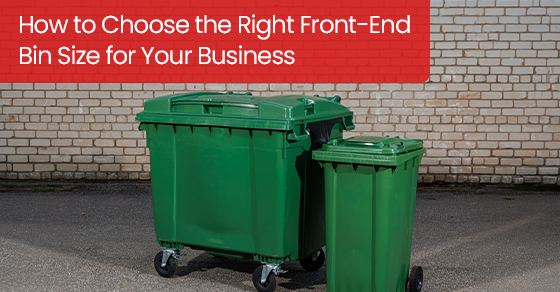
For ongoing commercial service, front-end bins are often available in a range of standard sizes. The best fit depends on how much waste you generate, how dense that material is, and how often the bin will be emptied.
| Bin Size |
Approximate Capacity |
Weight Limit |
Best Fit |
| 2 yard bin |
About 20 to 30 standard kitchen bags |
Up to 265 pounds |
Small offices, boutiques, and coffee shops |
| 3 yard bin |
About 30 to 40 standard kitchen bags |
Under 400 pounds |
Businesses with small to moderate waste output |
| 4 yard bin |
About 40 to 50 standard kitchen bags |
Up to 530 pounds |
Small restaurants, offices, and retail stores |
| 6 yard bin |
About 60 to 80 standard kitchen bags |
Up to 800 pounds |
Larger retail stores, apartment complexes, and mid-sized restaurants |
| 8 yard bin |
About 80 to 100 standard kitchen bags |
Up to 1,060 pounds |
Large restaurants, schools, warehouses, and high-volume properties |
This is where matching bin size to waste type becomes practical. A business with bulky packaging might need more volume, while a site generating heavier mixed commercial debris may need careful attention to weight limits as well.
Consider Pickup Frequency With Commercial Dumpster Sizes
Bin capacity and pickup schedule always work together. A smaller container with more frequent service may suit one business better than a larger container with fewer pickups. In other cases, a larger bin is the better move because it reduces the risk of overflow between service days.
Here are a few examples of how service frequency affects bin choice:
- A café with frequent food waste may prefer a smaller bin emptied more often to help manage odours.
- A retail store with steady packaging waste may do well with a mid-sized bin on a predictable weekly schedule.
- A busy apartment or mixed-use property may need a larger container to handle consistent daily volume.
- A business with occasional peaks may benefit from a slightly larger bin rather than increasing pickups year-round.
When businesses compare commercial dumpster sizes, the right answer is usually not just about going bigger. It is about finding the balance between capacity, cleanliness, and service frequency.
Know When a Front Load Dumpster Is the Better Fit
A front-load dumpster is a commercial waste bin designed for ongoing collection on a regular service schedule. It is lifted and emptied by a front-loading truck, which makes it a practical choice for businesses and properties with predictable waste output. This type of setup is commonly used when waste needs are recurring rather than temporary.
A front-load dumpster is often a strong fit for:
- Retail stores with regular day-to-day waste
- Restaurants and cafés generating steady bagged garbage
- Office buildings with routine commercial waste
- Apartment and multi-unit properties with shared disposal areas
- Schools, warehouses, and commercial sites with ongoing collection needs
For businesses that generate waste consistently, front-end bins offer a straightforward way to keep the property clean without relying on one-time haul-offs or changing disposal plans every few weeks.
Common Signs Your Business Needs a Different Bin Size
Sometimes the need for a change shows up in obvious ways. A waste setup that no longer fits the business tends to create the same kinds of problems over and over.
- Bins are overflowing before the next scheduled pickup
- You are paying for extra capacity that regularly goes unused
- Missed pickups create backups faster than the site can handle
- Odours are becoming harder to manage between service days
- Waste or loose bags are building up around the enclosure
- Staff are struggling to keep the disposal area tidy and usable
These issues usually point to one of two things: the current bin size is wrong, or the service frequency no longer matches the waste output. In some cases, both need to be adjusted. A quick review of actual usage can often show where the mismatch is happening.
Other Factors That Affect Front-End Bin Selection
Waste volume is a major part of the decision, but it is not the only one. The physical conditions of the property also matter when reviewing bin sizes and service needs.
A short checklist to keep in mind:
- Measure the available space where the bin will sit, including clearance around enclosures or gates.
- Confirm that collection trucks can access the area safely and without repeated obstructions.
- Review any local rules or site-specific requirements that affect waste storage or pickup.
- Compare actual bin dimensions with your loading area, waste volume, and service schedule.
Small-footprint properties may need a more compact option even if waste output is moderate. High-volume sites may need to prioritize capacity and access so pickups can happen smoothly without disrupting operations.
How the Right Front Load Dumpster Can Support Cleaner Business Operations
The right waste setup is built around more than one decision. Waste volume, pickup frequency, and property layout all affect how well a front-end bin will work on a day-to-day basis. When those factors are aligned, businesses usually see fewer overflow problems, cleaner waste areas, and better control over service costs.
For businesses comparing dumpster sizes and planning for reliable waste service, Basic Bins can help you find the right front-end solution for your property. We work with businesses that need practical answers around capacity, site layout, and ongoing collection needs, so the final setup supports cleaner operations from the start. Reach out to Basic Bins today at (604)-256-1583, email us at info@basicbins.ca or click here to get in touch online.